Oral Cancer Screening in North York
Changes in the mouth are easy to miss on your own. A short screening at your dental visit helps catch anything unusual early.
Oral cancer screening in North York at Emerald Forest Dental is a quick visual and hands-on check of your lips, tongue, cheeks, gums, palate, throat and neck. Your dentist looks for sores, patches or lumps that do not look normal. It is part of a regular exam, and anything unusual is watched closely or referred for testing.
- Typical time
- A few minutes during your exam
- Who it's for
- All adults, especially people who use tobacco, drink alcohol often or have had HPV
- Coverage
- Normally included in the exam fee; check your plan
- Recovery
- None
About oral cancer screening
Oral cancer can start on the tongue, the floor of the mouth, the cheeks, the gums, the lips or the back of the throat. In its early stages it often does not hurt, which is why many people do not notice it. A dentist or hygienist sees the inside of your mouth closely and often, so a dental visit is a natural time to check.
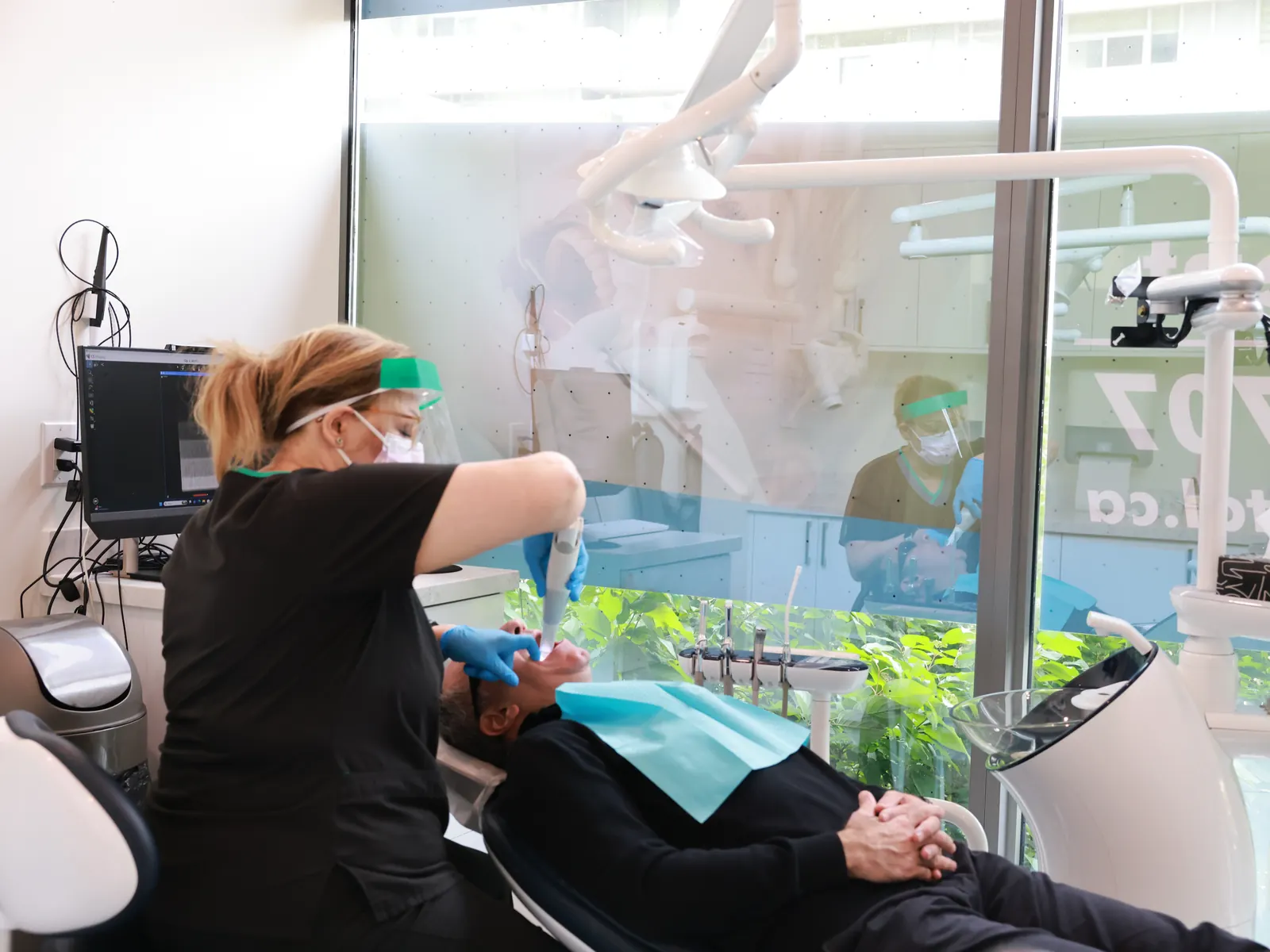
The screening is simple. Your dentist looks at every surface inside your mouth using a light and a small mirror. They gently pull your tongue to each side to see underneath and along the edges. Then they feel your cheeks, the floor of your mouth and the sides of your neck and jaw for lumps or swollen areas. You may be asked about any sore spots, hoarseness or trouble swallowing.
Most things found during a screening turn out to be harmless, such as a bite injury, a canker sore or irritation from a rough tooth. If your dentist sees a spot that is unclear, they will usually ask you to come back in about two weeks to see if it has healed. If it has not, they will refer you for a closer look and, if needed, a biopsy. A screening cannot diagnose cancer on its own, but it helps make sure nothing is overlooked.
Tell us if you notice
- A mouth sore that has not healed after two weeks
- A white or red patch on your gums, tongue or cheek
- A lump or thick area in your mouth or on your neck
- Ongoing hoarseness, a sore throat or trouble swallowing
- Numbness in your tongue or lip with no clear cause
Benefits
- Quick and done during your usual exam
- No needles or special preparation
- Helps find changes while they are small
- Gives you a clear next step if something looks unusual
What to expect
- Risk questionsYour dentist asks about tobacco, alcohol, sun exposure on your lips and any symptoms.
- Look insideEach part of your mouth and throat is checked with a light and mirror.
- Feel for changesYour dentist gently feels your cheeks, under your tongue, your jaw and your neck.
- Explain and planYou hear what was found, and any unclear spot is rechecked or referred for testing.
Cost and coverage
An oral cancer screening is usually part of a complete or recall dental exam rather than a separate charge. If your dentist needs to refer you for further testing, that care may be billed by the other provider or covered through OHIP, depending on the service. We can explain this if it comes up. Questions about insurance, the ODA suggested fee guide or the Canadian Dental Care Plan are welcome at our front desk, and LendCare payment plans are available for dental treatment.
Our promise: we confirm your coverage and explain the cost before treatment.
Your dental team
Dr. Hamed Jannati, DDS
General Dentist
Dr. Ye Zhang, DDS
General Dentist
Dr. Kasra Badii, DDS
General Dentist
Treatment is provided by our dentists. Dr. Ardeshir Ranjbari is a registered specialist in periodontics; our other dentists are general dentists. Some complex cases may be referred to a specialist.
Oral Cancer Screening FAQ
Who is most at risk of oral cancer?
Smoking, chewing tobacco and heavy alcohol use raise the risk, especially when combined. HPV infection is linked to some cancers at the back of the throat. People with no risk factors can still develop oral cancer, so screening is part of every adult exam.
Does the screening hurt?
No. It involves looking and gently feeling your mouth and neck. Some people feel a slight pull when the tongue is held to the side.
What does a worrying spot look like?
Spots that need a closer look include white or red patches, sores that do not heal, rough or thick areas and lumps. Many of these turn out to be harmless, but only a professional should decide.
What happens if you find something?
Often your dentist will recheck the area in about two weeks, since many sores heal on their own. If it is still there, you will be referred to a specialist who can take a small tissue sample for testing.
Can I check my own mouth at home?
Yes. Once a month, look at your lips, gums, tongue and cheeks in a mirror with good light. If something new lasts more than two weeks, call us rather than waiting for your next visit.
Trusted health information
Related services
Oral Cancer Screening near you
We see patients from across North York and nearby areas, including North York, Don Mills, Parkway Forest, Henry Farm, Willowdale, Scarborough, Richmond Hill, Markham.
This page is general information and is not a substitute for an exam. Your dentist will recommend what's right for you. Reviewed by: Dr. Hamed Jannati, DDS. Last updated 2026-10-26.
Book oral cancer screening in North York
New patients welcome. We'll confirm your coverage before treatment.