
Dental Sealants in North York
The chewing surfaces of back teeth have deep grooves where food and bacteria get trapped. A sealant fills in those grooves so they are easier to keep clean.
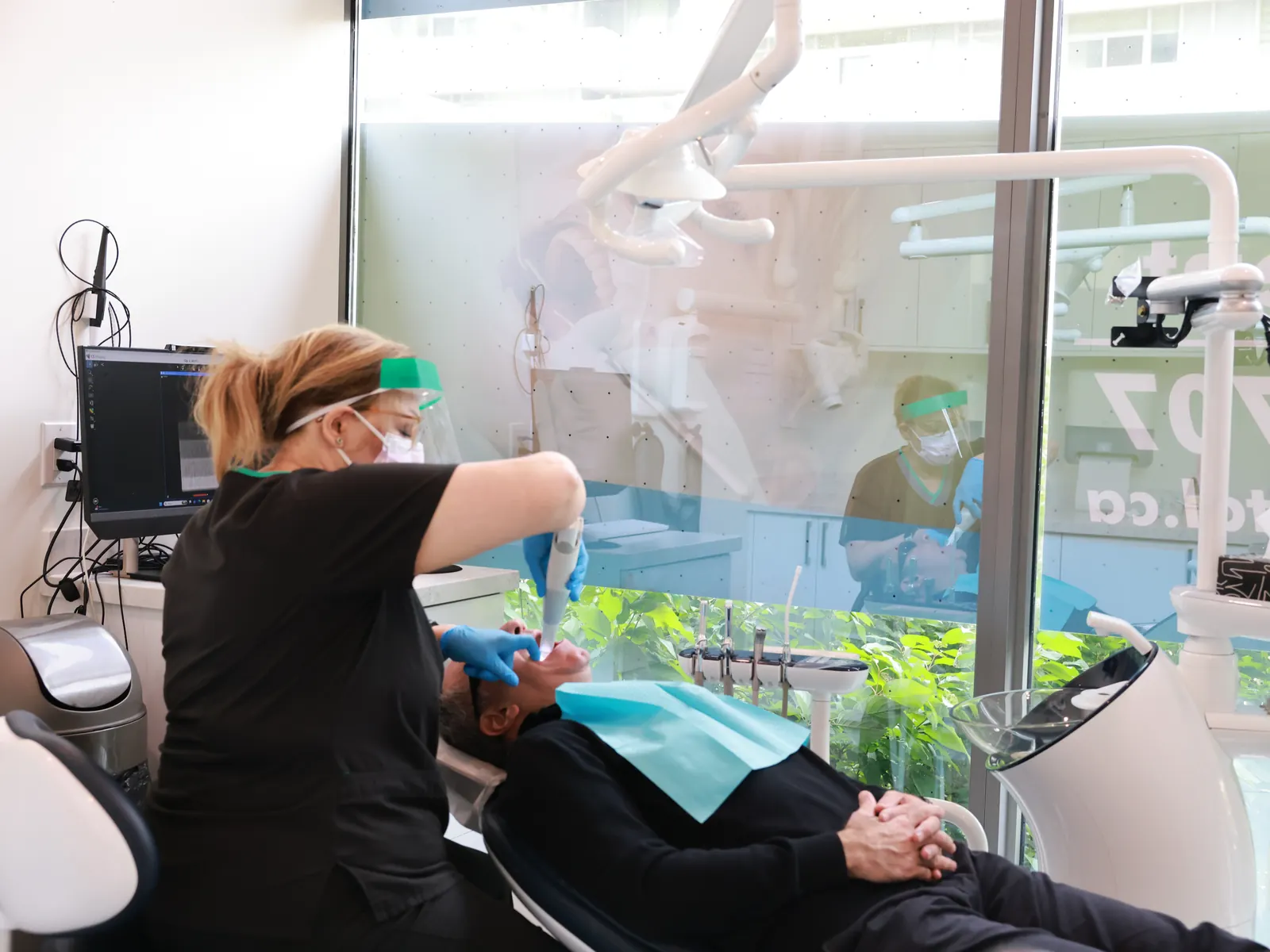
Dental sealants in North York at Emerald Forest Dental are thin, tooth-coloured coatings painted into the grooves of back teeth. They seal out food and bacteria from spots that toothbrush bristles often miss. Sealants are most often placed on children's new permanent molars, and the process usually needs no freezing or drilling.
- Typical time
- About 5–10 minutes per tooth
- Who it's for
- Mainly children and teens with new molars; sometimes adults with deep grooves
- Coverage
- Often covered for children on permanent molars; check your plan's age limits
- Recovery
- None; you can eat right away
About dental sealants
Molars and premolars have pits and fissures on their chewing surfaces. In many children these grooves are narrower than a single toothbrush bristle, so plaque settles in and stays. That is why so many cavities in young people start on the tops of back teeth, even in kids who brush well.
A sealant is a liquid resin that flows into those grooves and then hardens under a curing light. Once set, it forms a smooth surface that is easy to brush. Sealants do not change how the tooth looks much, since most are clear or tooth-coloured. They are usually placed soon after the first permanent molars come in, around age six, and again when the second molars arrive, around age twelve.
Sealants only go on teeth with healthy grooves or very early, non-cavitated changes. If a groove already has a real cavity, it needs a filling instead. Sealants can wear or chip over time, so your dentist checks them at each exam and touches them up if needed. They work alongside brushing, fluoride and fewer sugary snacks, and do not replace any of these.
Who sealants help
- Children whose first permanent molars have just come in
- Pre-teens getting their second set of molars
- Kids who have already had cavities in baby teeth
- Teens with braces who find back teeth hard to clean
- Adults with deep grooves and no fillings on those teeth
Benefits
- Helps protect the chewing surfaces where many cavities start
- Usually no needles, freezing or drilling
- Quick to place and easy to check at each visit
- Can be repaired or replaced if worn
What to expect
- Check the toothYour dentist makes sure the grooves have no cavities before sealing them.
- Clean and prepareThe tooth is cleaned and a mild gel is used briefly to help the sealant stick, then rinsed off.
- Keep it dryCotton or a small shield keeps saliva away while the sealant is placed.
- Paint and setThe liquid sealant is brushed into the grooves and hardened with a blue light.
- Check the biteYour dentist checks that the bite feels normal and smooths any high spots.
Aftercare
- Avoid chewing ice, hard candy and pen caps, which can chip sealants.
- Keep brushing twice a day with fluoride toothpaste; sealants protect only the chewing surface.
- Let us know if a sealed tooth feels rough or a piece seems to have come off.
Other options
If sealants are not a good fit, your dentist may suggest regular fluoride varnish to strengthen the grooves, or simply watching the teeth closely at each exam. If a groove already has decay, a small tooth-coloured filling is usually needed.
Cost and coverage
Sealants are priced per tooth, and the fee is usually based on the ODA suggested fee guide. Many insurance plans cover sealants on permanent molars for children up to a set age, but rules differ, so it helps to check before the visit. We can help you look into this. If your child is covered by the Canadian Dental Care Plan, ask our team how it applies to sealants; we accept CDCP. LendCare payment plans can be used for sealants and other care.
Our promise: we confirm your coverage and explain the cost before treatment.
Your dental team
Dr. Hamed Jannati, DDS
General Dentist
Dr. Ye Zhang, DDS
General Dentist
Dr. Kasra Badii, DDS
General Dentist
Treatment is provided by our dentists. Dr. Ardeshir Ranjbari is a registered specialist in periodontics; our other dentists are general dentists. Some complex cases may be referred to a specialist.
Dental Sealants FAQ
At what age should my child get sealants?
Sealants are often placed soon after the first permanent molars come in, around age six, and the second molars, around age twelve. Your dentist will check if the grooves are deep enough to benefit.
How long do sealants last?
Sealants can last several years with normal chewing, though some wear sooner. Your dentist checks them at every exam and can add more material if part has worn away.
Do sealants contain BPA?
Some sealant materials can release a tiny trace of BPA right after placement, far below everyday exposure from food and packaging. Rinsing after placement lowers it further. Ask your dentist about the material we use if you have concerns.
Can adults get sealants?
Yes, if a tooth has deep grooves with no decay or fillings. It is less common because adult teeth have often had fillings already. Your dentist can tell you if it is worthwhile.
Does my child still need to brush sealed teeth?
Yes. Sealants cover only the chewing surface. The sides of the teeth and the spaces between them still need brushing and flossing every day.
Trusted health information
Related services
Dental Sealants near you
We see patients from across North York and nearby areas, including North York, Don Mills, Parkway Forest, Henry Farm, Willowdale, Scarborough, Richmond Hill, Markham.
This page is general information and is not a substitute for an exam. Your dentist will recommend what's right for you. Reviewed by: Dr. Hamed Jannati, DDS. Last updated 2026-10-26.
Book dental sealants in North York
New patients welcome. We'll confirm your coverage before treatment.