
Dental Crowns in North York
A crown is a custom cap that covers a damaged tooth, holding it together and restoring its shape so you can chew with confidence again.
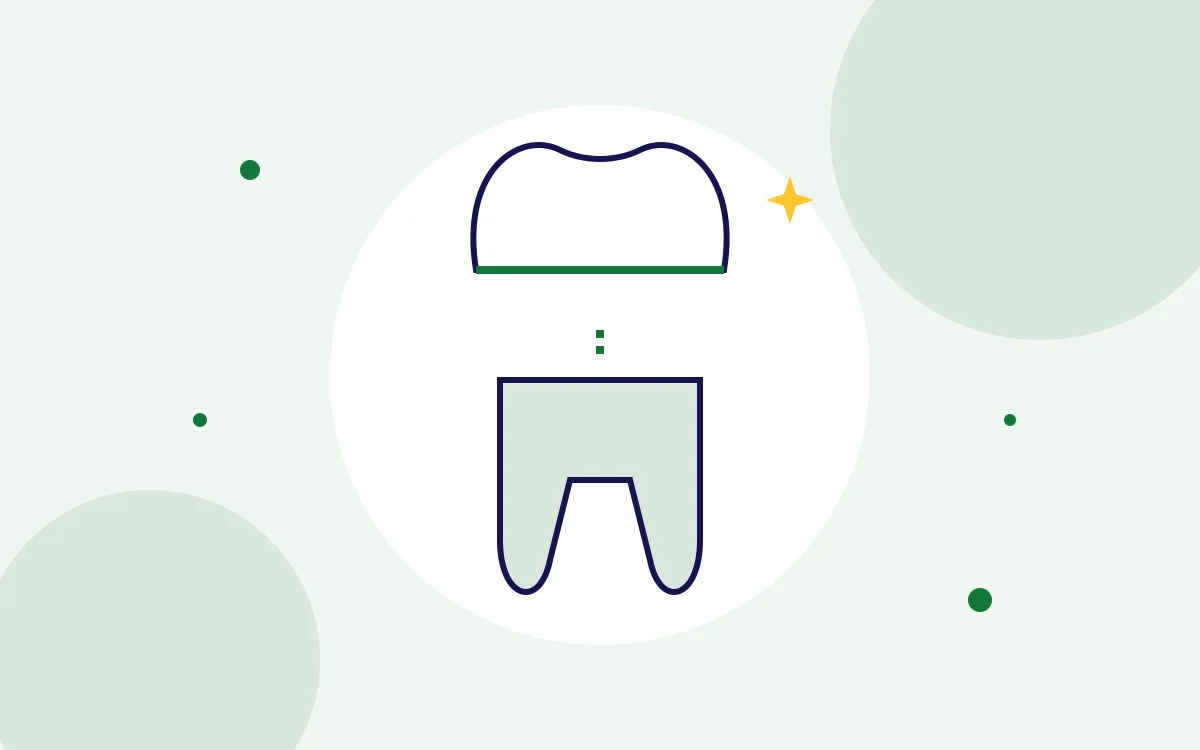
Dental crowns in North York at Emerald Forest Dental cover and protect a tooth that is cracked, heavily filled, worn down or weakened after a root canal. Your dentist shapes the tooth, takes an impression or scan, and places a temporary crown. The custom crown is usually cemented at a second visit a couple of weeks later.
- Typical time
- Usually two visits of about 60–90 minutes each
- Who it's for
- People with cracked, broken, heavily filled or root canal treated teeth
- Coverage
- Often partly covered as major restorative care; check your plan's limits and waiting periods
- Recovery
- Mild gum soreness or sensitivity for a few days
About dental crowns
A crown fits over the entire visible part of a tooth, like a thimble over a fingertip. It is used when a tooth has lost too much structure for a filling to hold, or when cracks put it at risk of splitting. By wrapping around the tooth, a crown spreads biting forces evenly and helps keep the remaining tooth from breaking.
Crowns can be made from different materials. All-ceramic and zirconia crowns are tooth-coloured and often chosen for teeth that show when you smile. Porcelain fused to metal crowns combine a metal inner layer with a tooth-coloured outer layer. Gold and other metal crowns are very strong and gentle on opposing teeth, though they are less common today. Your dentist will suggest a material based on where the tooth is, how you bite and how it will look.
Back teeth that have had a root canal are a common reason for a crown. Once the nerve is removed and a large access hole is made, the tooth can become brittle. A crown helps protect it from fracture. Crowns are also used to cover dental implants and to anchor bridges.
Signs you may need a crown
- A large filling takes up most of the tooth
- A tooth has a crack or hurts when you bite down and release
- A back tooth has had a root canal
- A tooth is badly worn from grinding
- A cusp, or corner, of a tooth has broken off
Benefits
- Helps hold a weakened or cracked tooth together
- Restores the tooth's shape for normal chewing
- Tooth-coloured options can match nearby teeth
- Can keep a damaged tooth in your mouth rather than removing it
What to expect
- Exam and X-rayYour dentist checks the tooth, its nerve and the surrounding bone to make sure a crown is a good choice.
- Prepare the toothWith the area frozen, the tooth is shaped and any decay or old filling is removed or rebuilt.
- Impression or scanA mould or digital scan records the shape of the tooth and your bite for the dental lab.
- Temporary crownA temporary crown protects the tooth while your custom crown is made.
- Fit and cementAt the second visit, your dentist checks the fit, colour and bite, then cements the crown in place.
Aftercare
- With a temporary crown, avoid sticky foods like caramel and gum, and slide floss out sideways instead of pulling up.
- If your bite feels high after the final crown is placed, call us for a quick adjustment.
- Brush and floss around the crown edge every day, since decay can still start where the crown meets the tooth.
Other options
If enough healthy tooth remains, an onlay may protect the weak part while saving more of the natural tooth. If a tooth cannot be saved, an extraction followed by an implant or bridge may be discussed. Your dentist will go over the pros and cons of each choice.
Cost and coverage
Crown fees reflect the material chosen, the lab work involved and whether the tooth needs a core build-up first. Many dentists in Ontario base their fees on the ODA suggested fee guide. Insurance plans often treat crowns as major care, with a lower coverage percentage, annual limits and sometimes a waiting period, so a pre-treatment estimate to your insurer can help. Ask us about CDCP if you have it, and about spreading the cost with LendCare payment plans.
Our promise: we confirm your coverage and explain the cost before treatment.
Your dental team
Dr. Hamed Jannati, DDS
General Dentist
Dr. Ye Zhang, DDS
General Dentist
Dr. Kasra Badii, DDS
General Dentist
Treatment is provided by our dentists. Dr. Ardeshir Ranjbari is a registered specialist in periodontics; our other dentists are general dentists. Some complex cases may be referred to a specialist.
Dental Crowns FAQ
How long does a dental crown last?
Crowns can last many years, but it depends on your bite, grinding habits and home care. Decay at the edge of the crown and cracks in the material are the most common reasons one needs replacing.
Does getting a crown hurt?
The tooth is frozen during preparation, so most people feel pressure rather than pain. The gums may feel tender for a day or two afterward, and mild sensitivity usually settles soon.
Can a crown be whitened?
No. Crown material keeps the shade it was made in. If you plan to whiten your teeth, it is often wise to do so before the crown is made so it can be matched to your new shade.
What if my temporary crown comes off?
Call us so we can recement it. In the meantime, keep the temporary safe and avoid chewing on that side. Leaving the tooth uncovered for long can let it shift or become sensitive.
Does every tooth with a root canal need a crown?
Not always. Back teeth usually need a crown because they take heavy biting forces. Front teeth with a small access opening can sometimes be restored with a filling. Your dentist will advise you.
Trusted health information
Related services
Dental Crowns near you
We see patients from across North York and nearby areas, including North York, Don Mills, Parkway Forest, Henry Farm, Willowdale, Scarborough, Richmond Hill, Markham.
This page is general information and is not a substitute for an exam. Your dentist will recommend what's right for you. Reviewed by: Dr. Hamed Jannati, DDS. Last updated 2026-10-26.
Book dental crowns in North York
New patients welcome. We'll confirm your coverage before treatment.