
Apicoectomy in North York
An apicoectomy is a small surgery on the tip of a tooth root. It can help when infection lingers after a root canal and redoing the root canal is not the right choice.
An apicoectomy in North York at Emerald Forest Dental is a minor surgery that removes infected tissue and the very tip of a tooth root, then seals the end of the root. It is usually considered when infection remains after a root canal. Your dentist will explain whether it, a repeat root canal or another option suits your tooth.
- Typical time
- About 30–90 minutes depending on the tooth
- Who it's for
- People with ongoing infection at a root tip after root canal treatment
- Coverage
- Often partly covered as surgical or endodontic care; check your plan
- Recovery
- Swelling and tenderness for a few days; stitches may be removed in about a week
About apicoectomy
Most root canals succeed, but sometimes infection stays around the tip of the root, called the apex. This can happen when a tooth has tiny side branches in its canals, a blockage, an unusual curve or a small crack that cleaning from inside the tooth cannot reach. You might notice tenderness, a small bump on the gum or a dark area on an X-ray at the root tip.
In many cases, the first option is to redo the root canal. When that is not practical, for example because the tooth has a post and crown that would be hard to remove, an apicoectomy may be considered. The surgery reaches the root tip through the gum instead of through the crown of the tooth.
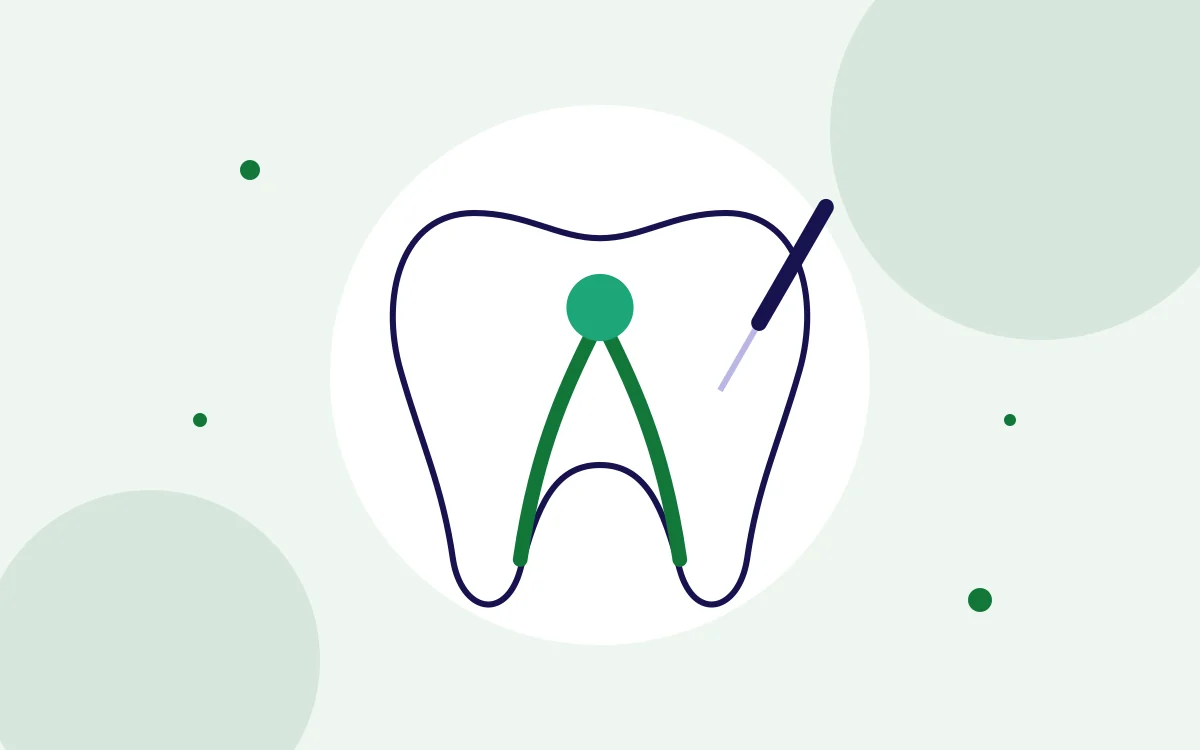
With the area frozen, a small cut is made in the gum near the root. The infected tissue and a few millimetres of the root tip are removed, and the end of the root is sealed with a small filling. The gum is then stitched closed. Over the following months, the bone around the root usually fills in as it heals, which your dentist can check on follow-up X-rays. This surgery is done here at our clinic.
An apicoectomy may be considered if
- A tooth that had a root canal is tender again months or years later
- A pimple-like bump keeps coming back on the gum near a treated tooth
- An X-ray shows a dark area around a root tip that is not healing
- Redoing the root canal is not practical because of a post or crown
- Your dentist suspects a canal branch that cannot be cleaned from inside
Benefits
- Can treat infection that a root canal could not reach
- May allow you to keep a tooth that would otherwise be removed
- Often avoids removing an existing crown
- Done with local anaesthetic in a short appointment
What to expect
- Review the toothYour dentist looks at X-rays and your history to decide whether a repeat root canal, apicoectomy or extraction makes sense.
- Freeze the areaLocal anaesthetic numbs the tooth, gum and surrounding bone.
- Reach the root tipA small opening in the gum allows access to the infected area at the end of the root.
- Remove and sealThe infected tissue and root tip are removed, and the end of the root is sealed with a small filling.
- Close and follow upThe gum is stitched, and follow-up visits and X-rays track healing over the next months.
Aftercare
- Use a cold pack on your cheek on and off for the first day to help limit swelling.
- Eat soft foods and avoid chewing on that side for a few days; do not pull your lip to look at the stitches.
- Call us if swelling or pain increases after the third day, or if you have a fever.
Other options
Other options include redoing the root canal, removing the tooth and replacing it with an implant, bridge or partial denture, or in some cases watching the area if there are no symptoms. Your dentist will explain the likely outcome of each so you can decide together.
Cost and coverage
An apicoectomy fee depends on the tooth involved, since front teeth are simpler to reach than back molars, and on whether a root-end filling or other steps are needed. The ODA suggested fee guide is commonly used to set fees in Ontario. Many plans cover part of this as endodontic or surgical care, so a pre-treatment estimate is a good idea. Ask us whether CDCP may apply if you are covered. LendCare payment plans can help with the cost.
Our promise: we confirm your coverage and explain the cost before treatment.
Your dental team
Dr. Hamed Jannati, DDS
General Dentist
Dr. Ye Zhang, DDS
General Dentist
Dr. Kasra Badii, DDS
General Dentist
Treatment is provided by our dentists. Dr. Ardeshir Ranjbari is a registered specialist in periodontics; our other dentists are general dentists. Some complex cases may be referred to a specialist.
Apicoectomy FAQ
Is an apicoectomy the same as a root canal?
No. A root canal cleans the canals from inside the tooth through the crown. An apicoectomy reaches the root tip from outside, through the gum, to remove infection a root canal could not clear.
Does an apicoectomy hurt?
The area is frozen during the procedure, so you should feel pressure rather than sharp pain. Some soreness and swelling afterward is normal and usually improves over a few days.
How long does it take to heal?
The gum usually feels much better within a week or two. The bone around the root heals more slowly, over several months, which is why follow-up X-rays are part of the plan.
Can I go back to work the next day?
Many people do, depending on their job and how they feel. Your dentist will give you advice based on the tooth and the extent of the surgery.
What if the apicoectomy does not work?
If infection continues, the tooth may need to be removed. Your dentist will talk with you about replacement options such as an implant or bridge.
Trusted health information
Related services
Apicoectomy near you
We see patients from across North York and nearby areas, including North York, Don Mills, Parkway Forest, Henry Farm, Willowdale, Scarborough, Richmond Hill, Markham.
This page is general information and is not a substitute for an exam. Your dentist will recommend what's right for you. Reviewed by: Dr. Hamed Jannati, DDS. Last updated 2026-10-26.
Book apicoectomy in North York
New patients welcome. We'll confirm your coverage before treatment.