Dental insurance and direct billing in North York
We accept most dental insurance plans and bill most insurance companies directly, so you usually pay only the part your plan doesn't cover.
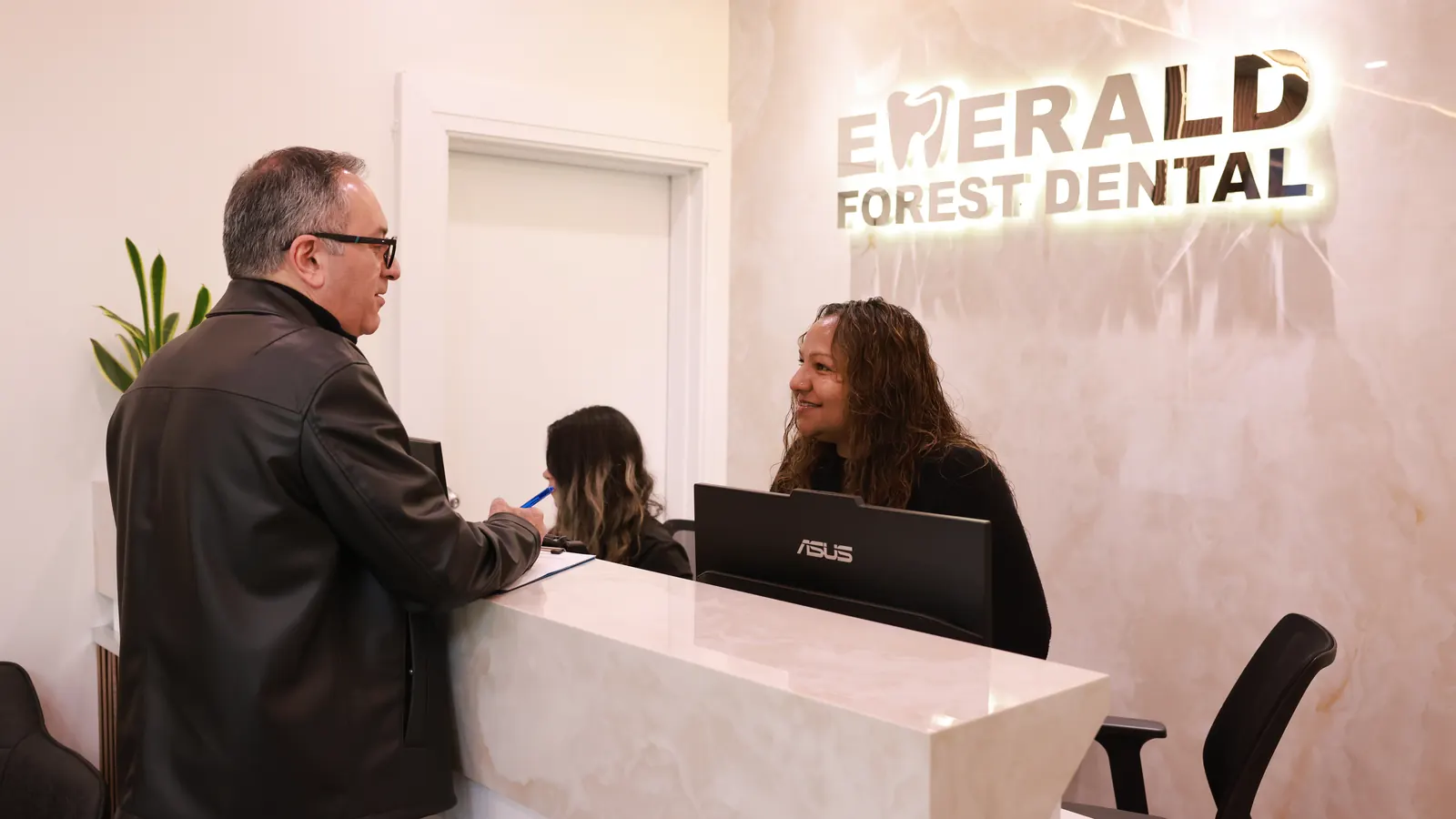
Emerald Forest Dental Clinic in North York accepts most dental insurance plans and bills most insurers directly. Bring your insurance company name, policy or group number and certificate number. We check your coverage before treatment, send predeterminations for larger work, and explain your share of the cost before we start.
- Insurance
- Most plans accepted
- Direct billing
- To most insurance companies
- Before treatment
- Coverage check and cost estimate
- No insurance?
- ODA fee guide, CDCP, payment plans
Direct billing at Emerald Forest Dental
Direct billing (sometimes called assignment of benefits) means we send your claim to your insurance company electronically, and the insurer pays us directly. You pay only the portion your plan doesn't cover, such as your coinsurance or any amount over your plan's limits.
We bill most insurance companies directly. If your plan doesn't allow direct billing, for example some plans that only reimburse the member, we'll give you a detailed receipt and help you submit the claim yourself.
- Coverage checked first. We look up your plan before treatment so you know your share in advance.
- Clear estimates. Before any larger treatment we show you the cost, what your plan is expected to pay and what's left for you.
- Help with paperwork. We send predeterminations and follow up with insurers when a claim needs more information.
What to bring to your appointment
Having your plan details ready lets us check your coverage before your visit. You'll usually find them on your benefits card or in your employer's benefits booklet.
- The name of your insurance company
- Your policy, plan or group number
- Your certificate, ID or member number
- The plan member's full name and date of birth (if the plan is through a spouse or parent)
- Details of any second dental plan
- Photo ID
New patient? You can fill in your patient forms online before your visit.
How dental insurance coverage works
Every plan is different, but most Canadian dental plans use the same building blocks. Knowing them makes your estimate easier to understand.
Coverage categories
Plans usually group care into preventive (exams, cleanings, X-rays), basic (fillings, extractions, root canals) and major (crowns, bridges, dentures, implants). Each category is often paid at a different percentage.
Coinsurance
The percentage your plan pays for a covered service. The rest is your share.
Deductible
An amount some plans ask you to pay each year before they start paying.
Annual maximum
The most your plan pays in a benefit year. Some plans have separate maximums for major work or orthodontics.
Frequency limits
Rules on how often a service is covered, for example check-ups every 6 or 9 months, or full X-rays every few years.
Fee guide
Many plans pay based on a specific year of the Ontario Dental Association suggested fee guide. If your plan uses an older guide, there can be a small difference to pay.
If you have two dental plans
If you're covered by your own plan and a spouse's or parent's plan, the two plans can share the cost. This is called coordination of benefits, and it can lower or remove your share.
- For you: your own plan pays first, and your spouse's plan pays second.
- For children: under the common Canadian guideline, the plan of the parent whose birthday comes first in the calendar year usually pays first. Some plans have different rules for separated or divorced parents.
Tell us about both plans when you book, and we'll send the claim to each insurer in the right order.
Have a health spending account? Some can be billed directly. Others reimburse you after you submit your receipt. Either way, it can often cover what your main plan doesn't.
Predeterminations for larger treatment
For treatment such as crowns, bridges, dentures, implants or Invisalign, we can send a predetermination (also called a pre-treatment estimate) to your insurer first. The insurer replies with what it expects to pay, so you can decide with real numbers in front of you.
Coverage for implants and orthodontics varies widely between plans, so a predetermination is especially useful for these. Insurers usually reply within a few weeks.
Making the most of your benefits
- Keep up with check-ups. Preventive care is often covered at the highest percentage, and catching problems early usually means simpler treatment.
- Know your benefit year. Many plans reset on January 1, others on a different date. Unused coverage usually doesn't carry over.
- Plan larger treatment across benefit years when it's safe to wait, to use two years of maximums. Your dentist will tell you if waiting isn't a good idea.
- Ask about family bookings. We can book family members back-to-back and check everyone's coverage at once.
No dental insurance?
You're welcome at Emerald Forest Dental with or without insurance.
- Canadian Dental Care Plan: if you don't have private insurance and your adjusted family net income is under $90,000, you may qualify. We accept the CDCP. See our CDCP guide.
- Clear fees: our fees for uninsured patients follow the Ontario Dental Association suggested fee guide, and we give you an estimate before treatment.
- Payment plans: spread the cost of larger treatment with LendCare, a third-party financing company, subject to approval.
- Payment methods: debit, Visa, Mastercard, American Express, cash and e-transfer.
See all payment options.
Frequently asked questions
Do you direct bill dental insurance?
Yes. We bill most insurance companies directly, so you usually pay only the part your plan doesn't cover. If your plan doesn't allow direct billing, we'll give you a receipt to submit yourself.
Do you accept my insurance?
We accept most dental insurance plans. Call us at (416) 792-7707 with your insurance company and policy details and we'll check your coverage before your visit.
Why might I still owe something after insurance?
Most plans pay a percentage of each service, have yearly maximums and frequency limits, and may pay based on an older fee guide. We explain your share before treatment, so there are no surprise bills.
How does coverage work for my children with two parents' plans?
Usually the plan of the parent whose birthday comes first in the calendar year pays first, and the other plan pays second. Give us both plans and we'll bill them in the right order.
What is a predetermination?
It's an estimate request we send to your insurer before larger treatment such as crowns, implants or Invisalign. The insurer replies with what it expects to pay, so you can decide before starting.
Can I use my health spending account?
Yes. Some health spending accounts can be billed directly, and others reimburse you once you submit your receipt. They often cover what your main plan doesn't.
I lost my dental benefits. What are my options?
If you no longer have access to private dental insurance, you may qualify for the Canadian Dental Care Plan, which we accept. We also offer ODA fee guide pricing and LendCare payment plans.
Related pages
Sources
Links to official sources for patients without private insurance and for checking a dentist's registration in Ontario.
Last updated 2026-10-26. Reviewed by Dr. Hamed Jannati, DDS.
Ready when you are
New patients welcome. We'll confirm your coverage before treatment.