
Night Guards in North York
Many people grind or clench their teeth in their sleep without knowing it. A custom night guard puts a cushion between your teeth to help protect them.
Night guards in North York at Emerald Forest Dental are custom-made mouthpieces worn while you sleep to protect your teeth from grinding and clenching. Your dentist takes an impression or scan of your teeth so the guard fits snugly and comfortably. A night guard does not stop grinding, but it helps prevent wear, chips and cracked teeth.
- Typical time
- Two short visits: one to take an impression or scan, one to fit the guard
- Who it's for
- Adults and teens who grind or clench their teeth at night
- Coverage
- Some plans cover night guards, often with a time limit between replacements; check your plan
- Recovery
- None; most people adjust within a week or two
About night guards
Grinding and clenching, called bruxism, often happens during sleep. Stress, sleep problems, some medicines and caffeine can all play a part. Because it happens while you are asleep, many people only find out when a partner hears it or their dentist sees signs like flattened teeth, chipped edges, small cracks or worn fillings. Over time, the force can also make the jaw muscles sore.
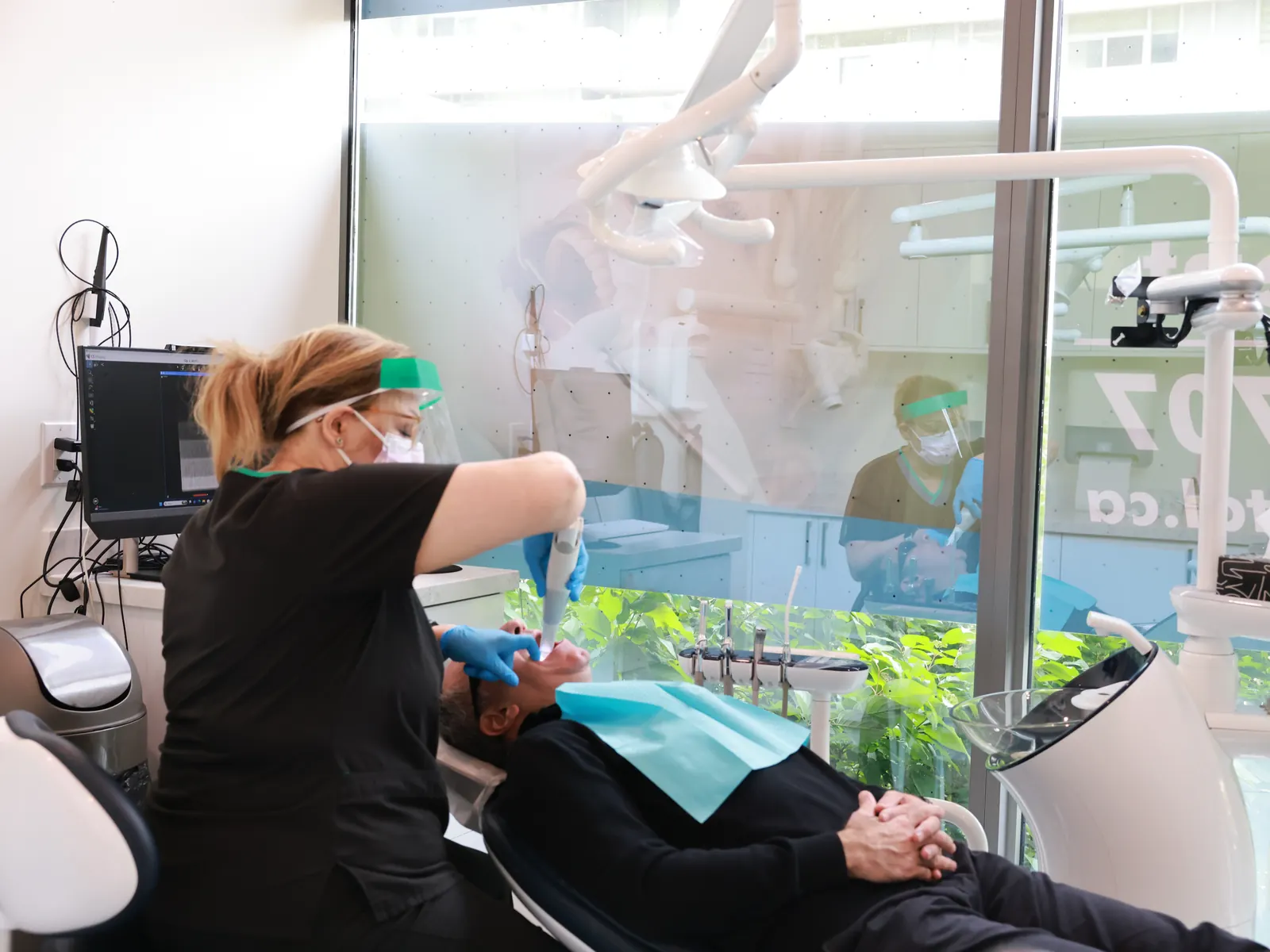
A custom night guard is a thin, hard or dual-layer plastic appliance that fits over your upper or lower teeth. Your dentist takes an impression or digital scan, and the guard is made from that model so it fits your teeth closely. At the fitting visit, your dentist adjusts it so your teeth touch evenly when you close. This spreads the force out and lets the guard take the wear instead of your enamel.
Store-bought boil-and-bite guards are thicker and less precise. Some people find them bulky, and a soft guard can even encourage chewing. A custom guard is usually slimmer and more stable. It is also worth knowing that a night guard protects your teeth but does not treat the cause of grinding. If you snore loudly or wake up tired, mention it to your doctor, since grinding can be linked to sleep breathing problems.

Signs you may grind your teeth
- You wake up with a sore jaw, tight face muscles or a headache at your temples
- Your teeth look flatter, shorter or chipped at the edges
- Someone has heard you grinding at night
- Your teeth feel sensitive with no cavity found
- Fillings or crowns keep breaking
Benefits
- Helps protect enamel, fillings and crowns from wear
- Spreads biting force more evenly across your teeth
- May ease morning jaw soreness for some people
- Slimmer and better fitting than store-bought guards
What to expect
- ExamYour dentist checks for wear, cracks and jaw tenderness and asks about your sleep.
- Impression or scanA mould or digital scan of your teeth is taken to make your guard.
- FittingYou try the guard, and your dentist adjusts it until your bite feels even.
- Follow-upAt later visits, we check the guard for wear and make small adjustments if needed.
Aftercare
- Rinse your guard each morning and brush it gently with a soft brush and cool water; hot water can warp it.
- Store it dry in its case, away from pets and heat.
- Bring your guard to your dental visits so we can check its fit and wear.
Other options
Depending on what your dentist finds, other steps may help alongside or instead of a night guard, such as stress management, cutting back on caffeine and alcohol in the evening, jaw stretches or physiotherapy for the jaw. If grinding is linked to a jaw joint problem, your dentist may talk with you about TMJ treatment.
Cost and coverage
A custom night guard involves an exam, an impression or scan, lab fabrication and a fitting visit, and the fee reflects all of these. Most offices use the ODA suggested fee guide as a reference. Some insurance plans cover a guard once every few years, while others do not cover it at all, so ask your insurer or let us check for you. If you are enrolled in the Canadian Dental Care Plan, please ask whether it can be used toward a guard here. LendCare payment plans are available.
Our promise: we confirm your coverage and explain the cost before treatment.
Your dental team
Dr. Hamed Jannati, DDS
General Dentist
Dr. Ye Zhang, DDS
General Dentist
Dr. Kasra Badii, DDS
General Dentist
Treatment is provided by our dentists. Dr. Ardeshir Ranjbari is a registered specialist in periodontics; our other dentists are general dentists. Some complex cases may be referred to a specialist.
Night Guards FAQ
Do I really need a custom night guard?
If your dentist sees signs of grinding damage, a custom guard is the more stable and comfortable option. Store-bought guards can help in the short term but often fit poorly. Your dentist can explain the difference for your teeth.
Will a night guard stop me from grinding?
No. It protects your teeth from the effects of grinding, but it does not stop the habit. Some people find they clench less, but that varies.
How long does a night guard last?
It depends on how hard you grind. Many guards last several years with good care. We check yours at each visit and let you know when it is wearing thin.
Is it hard to get used to sleeping with a guard?
Most people adjust within a week or two. You may notice extra saliva or a slight tight feeling at first. If it still feels uncomfortable after that, we can adjust it.
Is a night guard the same as a sports mouthguard?
No. A night guard is thinner and made to handle grinding forces. A sports mouthguard is thicker and softer to absorb impacts. They are not interchangeable.
Trusted health information
Related services
Night Guards near you
We see patients from across North York and nearby areas, including North York, Don Mills, Parkway Forest, Henry Farm, Willowdale, Scarborough, Richmond Hill, Markham.
This page is general information and is not a substitute for an exam. Your dentist will recommend what's right for you. Reviewed by: Dr. Hamed Jannati, DDS. Last updated 2026-10-26.
Book night guards in North York
New patients welcome. We'll confirm your coverage before treatment.